
요즘 부쩍 지속가능발전협의회 활동가, 시민단체 활동가들과 지속가능발전목표 16번 ‘정의, 평화, 포용’을 두고 이야기할 기회가 많아집니다. 생소한(?) 회복적 정의를 반신반의 하는 분위기지만 그 방향에는 대부분 공감합니다. 그런데 어떻게 조직이나 활동에 적용해야 할지 모르겠고, 우리가 사법과 무슨 상관이 있냐고 되묻습니다. 방향이 맞는다면 더디더라도 가는게 맞겠지요.
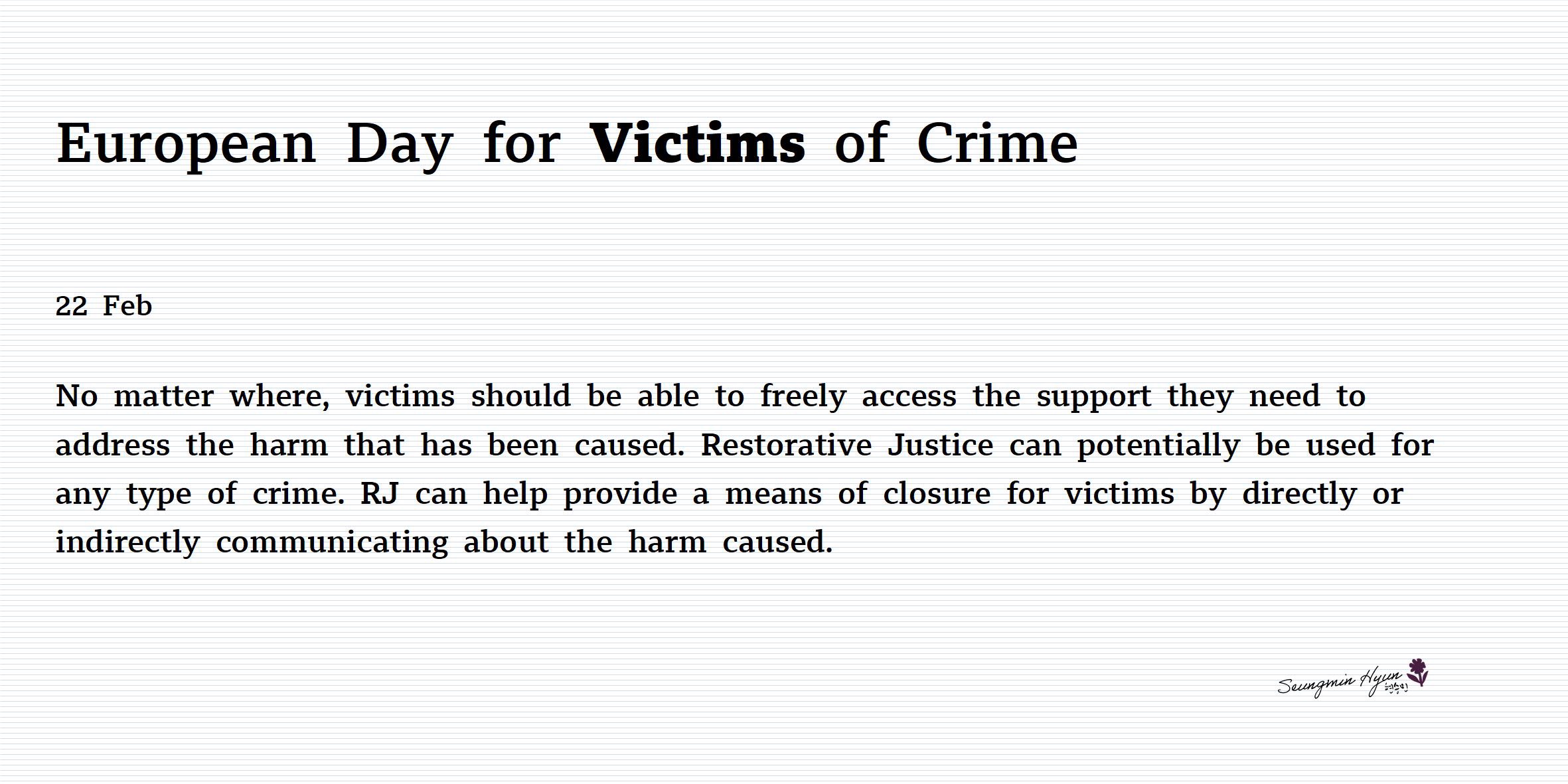
22 Feb, European Day for Victims of Crime.
Every year millions of people in the European Union become victims of crime. The COVID-19 pandemic had its impact too. During the lockdown measures, we saw a rise in domestic violence, child sexual abuse, cybercrime, and racist and xenophobic hate crime. These victims need particular attention.
No matter where, victims should be able to freely access the support they need to address the harm that has been caused. Restorative Justice can potentially be used for any type of crime. RJ can help provide a means of closure for victims by directly or indirectly communicating about the harm caused.
(Statement by Vice-President Jourová and Commissioner Reynders on the European Day for Victims of Crime)
매년 2월 22일은 유럽연합국가의 ‘범죄피해자의 날’입니다. 유럽에서만 매년 수백만명이 범죄의 피해를 입습니다. 코로나19 유행 이후 가정폭력, 아동학대, 사이버 범죄, 인종차별 등 증오범죄가 증가했고 피해자들에게 주의를 기울여야 합니다. (한국도 마찬가지입니다.) 여러 제도가 만들어지고 있지만 앞으로 피해자는 어디에서나 피해 회복을 필요한 지원을 자유롭게 이용할 수 있어야 합니다. 회복적 정의에 기초한 사법 절차는 잠재적으로 모든 유형의 범죄에 사용될 수 있습니다. 그리고 직간접적인 소통을 통해 문제를 매듭짓는데 도움을 줄 수 있습니다. (참고. Statement by Vice-President Jourová and Commissioner Reynders on the European Day for Victims of Crime)
* 숫자 2가 12번이나 겹쳐 엔젤넘버라고 불리는 2022-02-02, 22:22:22 또는 2’s day on Tuesday 가 신기하네요. 기억하기 좋을 듯!



 현승민, 쓸쓸한 길